Chapter 04
Learning to Balance
四
Chapter 3: Learning to Balance
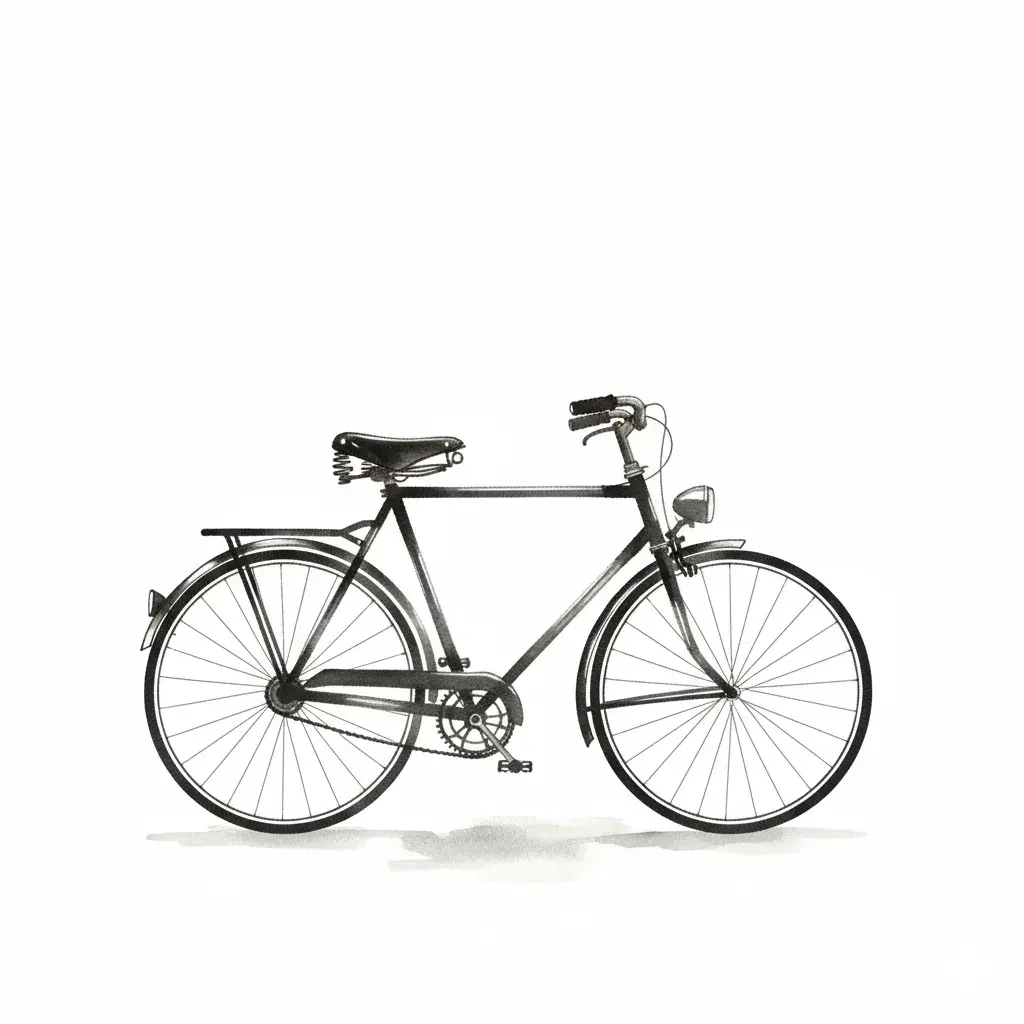
“Are you ready?”
My dad’s hands gripped the back of my bike seat firmly. I nodded, my six-year-old fists white-knuckling the handlebars. The training wheels lay in our home, freshly removed. The street stretched ahead, empty and intimidating.
I wanted to be like the older kids who rode their bikes like they were flying - hands off the handlebars, weaving effortlessly through the neighborhood streets.
Dad pushed me forward as he jogged alongside. I started pedaling. A few steps in, he let go.
Almost immediately, I careened to the right. Panic. I gripped the handlebars tighter and pedaled as hard as I could. The momentum straightened me out, pulling me back toward the center of the road.
Then, for just a moment, I felt it. Balance. The bike and I were working together instead of fighting each other. For an instant, I tasted the freedom I’d been watching the older kids enjoy.
Then I crashed into a trash can.
But as I picked myself up, brushing off scraped knees and elbows, I couldn’t stop grinning. Balance was real. I had felt it.
In those early attempts, I thought speed was the secret. The faster I pedaled, the longer I stayed upright. But as I got more comfortable with those brief moments of balance, something interesting happened. I started noticing I could balance at slower speeds too.
I’d seen the older kids do impossible things - balancing their bikes while barely moving, even keeping steady with their feet on the pedals while stopped at intersections. Magic tricks, I thought.
But now I understood. Learning to ride a bike had two components: momentum and balance. I’d been using speed to create opportunities to discover balance. But once I found that balance point, I didn’t need as much momentum. And when I felt myself starting to wobble, a quick push on the pedals would give me just enough forward motion to find my balance again.
It’s easy to see how these two components work together. The pedaling part - muscle power, effort, momentum - that’s explicit. You can instruct someone on how to pedal. But balance can’t be described the same way. You can’t really explain how to balance on a bike any more than you can explain how to balance while walking. It’s tacit - something you have to discover for yourself.
When you first learn to ride, it makes complete sense to focus on pedal power. That’s what feels controllable. And there’s nothing wrong with that approach. Some of the most joyful bike riding happens when you’re pedaling hard - racing friends around the neighborhood, feeling the wind rush past, working up a sweat on a challenging hill. But once you get comfortable, you start noticing there are other ways to ride too. You see grandmothers cruising slowly through the park with their grandchildren, barely pedaling, just enjoying the gentle momentum and the conversation.
The lessons were simple enough, but now the knowledge lived in my body. After enough attempts and minor scrapes, I had learned to ride a bike.
The Meditation Connection
While not a perfect analogy, learning to meditate seems to work the same way as learning to ride a bike.
When learning to ride a bike, we’re told: “Get on the bike, pedal forward to build momentum, and when you start to lean one way, shift your weight to balance yourself back.”
When learning to meditate, we’re told: “Sit down, concentrate on your breath to gather your attention, and when you become aware your mind is wandering, bring your concentration back.”
Both are about not falling off - one is trying not to fall off the bike physically, the other is trying not to fall off into distraction mentally.
It’s easy to see how these two components work together. Just like biking has momentum and balance, meditation has concentration and awareness. Concentration is like focusing your attention and directing it deliberately. You can teach someone exactly how to sit, where to concentrate. But awareness is more diffuse - a spacious quality of mind that notices what’s happening. Awareness can only be pointed to.
The Natural Focus on the Explicit
When you first try meditation, it makes complete sense to focus on concentration. That’s what feels controllable - you can decide where to place your attention, where to sit, how long to sit. Just like when I first got on that bike, the pedaling part felt like something I could manage.
So you approach meditation the way I first approached that bike. You think the secret is effort. If you can just concentrate hard enough, focus intensely enough, you’ll achieve that peaceful state you’ve heard about.
You sit down, close your eyes, and grip your attention like I gripped those handlebars. You focus on your breath with fierce determination. When your mind wanders, you yank it back with the mental equivalent of frantic pedaling.
For a few seconds, maybe even a minute, it seems to work. Your mind feels focused, your breathing is steady. “I’m doing it!” you think.
Then your mind starts wandering to your to-do list, that conversation from yesterday, whether you’re meditating correctly. You try to force your attention back to breathing, but now you’re fighting yourself. The harder you concentrate, the more scattered you feel.
But sometimes - just like my brief moment of bike balance - you catch it. You experience something different. Thoughts seem to cruise by without pulling you along. You feel aware but not effortful. For a moment, you’re not trying to meditate - you’re just present.
Then, like my crash into the trash can, you lose it. You wake up from what feels like daydreaming, wondering if you were meditating or just spacing out.
You get back up, sit down again, and repeat the process. Grip your attention, focus hard, catch a glimpse of something effortless, then crash back into distraction. Over and over.
The Hidden Challenge
The takeaway for most people is that meditation requires incredible concentration and effort. They believe that competency in meditation is going to come with the dedication of a Tour de France rider. It’s going to take 10,000 hours of practice and dedication to capture and sustain those brief moments they’ve experienced.
They’re pedaling as hard as they can, not realizing they’re trying to discover balance. Just like with biking, concentration alone isn’t sustainable. You can build remarkable focus - and there’s nothing wrong with intensive concentration practices - but what makes meditation work is concentration working together with awareness. Just like forward momentum working with balance is what makes bike riding possible.
The challenge is that most people come away thinking it’s all about the concentration part. They miss that there’s this second component - awareness. And unlike with biking, where you can see people riding effortlessly, you can’t see how experienced meditators work with awareness.
Why You Can’t See the Balance
Here’s the difference between learning to meditate and learning to ride a bike: when I was learning to bike, I could watch the older kids and see exactly what I was aiming for. I could observe their technique, their confidence, their effortless control.
I could see them balancing at slow speeds, coasting with barely any pedaling, even keeping steady while stopped at intersections. These weren’t magic tricks - they were demonstrations of what balance looked like.
With meditation, the “older kids” are invisible. You can’t see someone else’s awareness the way you can see their bike-riding skills. You might sense something in certain people - a quality of presence, a calmness that seems effortless - but you can’t observe what they’re actually doing. You can’t see them wobble.
So of course you assume meditation is all about pedaling harder. That’s the only part you can see in the instructions. The effort part is visible and teachable. The balance part is invisible and has to be discovered.
This is why so many people approach meditation like I approached that bike in the beginning - gripping tight and pedaling frantically, thinking more effort equals better results. When your mind feels chaotic and uncontrollable, when concentration seems impossible, it’s natural to conclude you need to try harder.
You weren’t doing anything wrong. Given what you could observe, of course you pedaled harder. The instructions pointed you toward concentration because that’s what can be taught directly. But they couldn’t show you what balance feels like - that recognition has to be your own.
The Confusion
Here’s where things get tricky.
We just saw that biking has two distinct components - momentum and balance. You can feel the difference between pedaling (explicit, mechanical, something you consciously control) and balancing (tacit, discovered, something you learn to feel).
So if meditation works the same way, with concentration as the pedaling and awareness as the balance, we should be able to feel that distinction too, right?
But when you actually sit down to meditate, it doesn’t feel like two separate things at all. It all just feels like… attention. One unified thing in your head that’s either working or not working. When your mind wanders, it feels like your “attention” failed. When you bring focus back to your breath, it feels like your “attention” is working again.
We talk about meditation having two components - concentration and awareness. But experientially, in your actual practice, it all blends together into this single experience of trying to pay attention.
So what’s actually going on in there? When we say “attention,” what are we even talking about?
Let’s take a closer look.