Chapter 02
Looking vs. Seeing
二
Chapter 1: Looking vs. Seeing
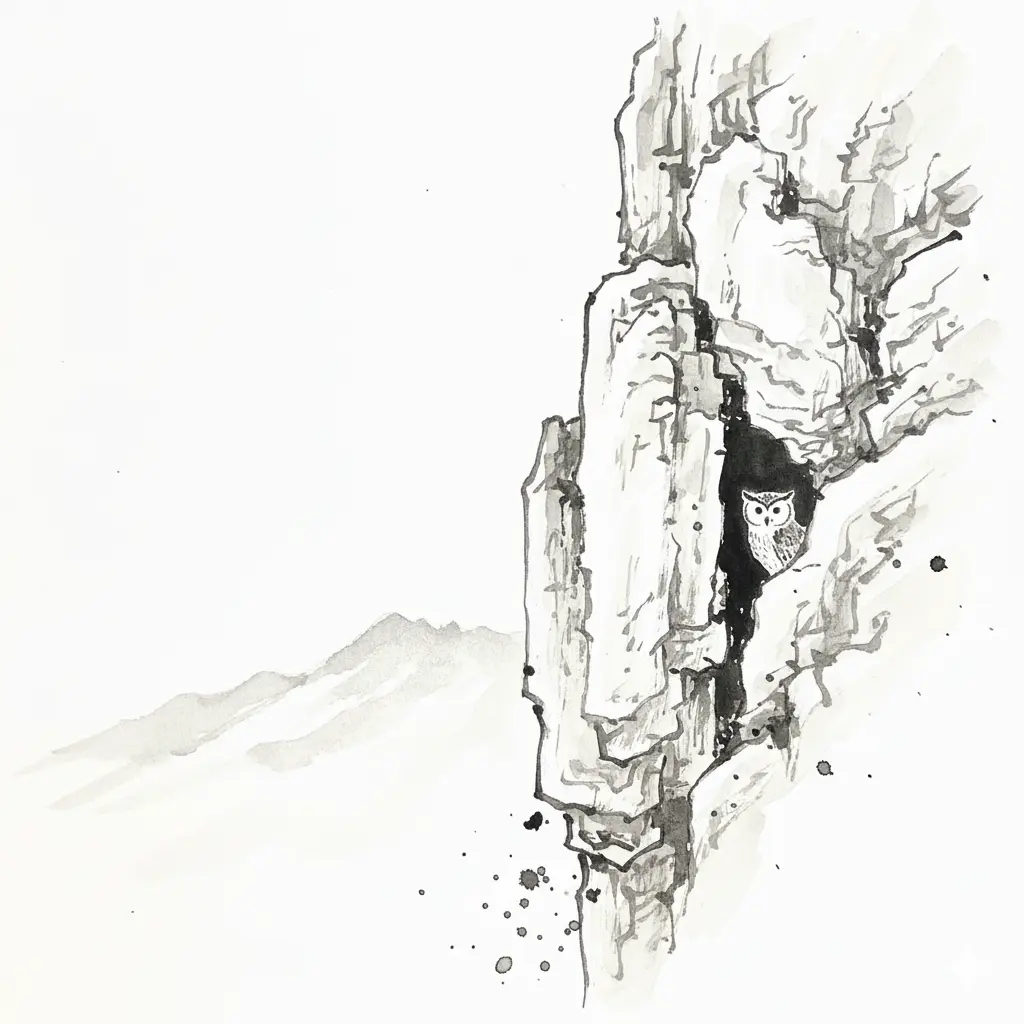
There’s a world of difference between looking at something and actually seeing it. I learned this on a crisp morning in Colorado Springs, where the thin mountain air seemed to sharpen every detail of the landscape around me.
At Garden of the Gods, a small crowd had gathered near one of the towering red rocks, pointing upward with excitement. They’d spotted an owl.
I joined them, following their gestures toward the cliff face. I was looking exactly where they pointed - I could see every crag and shadow on the rocks. But the owl? Nothing. Just stone and sky.
“I don’t see it,” I admitted. One of the onlookers stepped closer.
“See that distinctive rock at the edge?” he pointed and asked.
“Yes,” I replied.
“Look right from there, until you spot what looks like a small cave.”
And then it happened. “Oh!” The sound escaped before I could catch it. The owl had been there all along, perfectly settled into its rocky perch. I hadn’t suddenly gained better eyesight or changed my viewing angle. Instead, something had shifted in my understanding - a moment when looking became seeing.
The Meditation Problem
This is what happens with meditation. You can hear instructions that tell you to sit down, close your eyes, and follow your breath. You can position yourself exactly where the instructions point you - in a quiet room, on a cushion, with good posture. You can look precisely where they direct your attention - to the sensation of breathing, the rise and fall of your chest.
But for many people, that’s all they encounter - the mechanics of breathing and the struggle to follow the instructions. They sit there doing exactly what they’ve been told, yet they feel like they’re missing something fundamental. The promised sense of calm or clarity feels as elusive as that perfectly camouflaged owl.
“I don’t feel peaceful,” they think. “My mind is all over the place. Am I doing this wrong?”
Meanwhile, others describe meditation as transformative, as a practice that brings deep insight and lasting calm. They talk about it the way those people at Garden of the Gods talked about the owl - with the excitement of someone who has clearly seen something remarkable.
The instructions tell you where to look, but they can’t teach you how to see. And if you don’t see what meditation offers, it’s easy to conclude that meditation just doesn’t work for you.
You Know This Feeling
This isn’t unique to meditation. You’ve felt this shift from looking to seeing before, probably more times than you realize.
[Figure 1.1: Rubin’s Vase]
Look at this image. You see a vase - elegant, symmetrical, clearly defined. But there’s something else there. Keep looking at the same lines, the same shapes. If you only saw the vase, you might think this image is simple, maybe even boring. But then suddenly - there they are. Two faces in profile, looking at each other. The same visual information was always there, but now you’re seeing something completely different.
[Figure 1.2: Necker Cube]
Here’s another one. This appears to be a simple wireframe cube. But which face is in front? The top-left or the bottom-right? Keep looking… there it is. The cube flips. What seemed like a flat drawing suddenly has depth, dimension, multiple perspectives. Nothing changed in the image itself, but everything changed in your seeing of it.
You know that moment - when the faces appear in Rubin’s vase, when the Necker cube flips perspective. It’s not gradual. It’s not something you can force through concentration or effort. One moment you’re looking at lines and shapes, the next moment you’re seeing something entirely different. The “Oh!” is involuntary.
The Connection
What if meditation works the same way?
What if the problem isn’t that meditation doesn’t work, but that you haven’t seen it yet? What if you’ve been looking at all the right things - your breath, your posture, your wandering thoughts - but you haven’t experienced that shift from looking to seeing?
When you stare at Rubin’s vase and only see the vase, you don’t conclude that your eyes are broken. You don’t think you’re bad at looking at images. You understand that there’s something there you haven’t seen yet. The same visual information that reveals the faces to others is available to you - you just haven’t experienced that moment of recognition.
This is what’s happening with meditation. The instructions can tell you where to look, but they can’t teach you how to see. That shift - from mechanical attention to effortless awareness, from struggling with thoughts to resting in the space around them - that’s something you recognize when it happens, not something you can think your way into.
No one can tell you exactly how to find that moment of recognition. They can point you toward it, give you the conditions that make it more likely, but the seeing itself is yours to discover.
So how do you learn to see what you’re looking for?